


Uric acid urine test
The uric acid urine test measures the level of uric acid in the urine.
The uric acid blood level can be checked using a blood test.
How the Test is Performed
A 24-hour urine sample is often needed. You will need to collect your urine over 24 hours. Your health care provider will tell you how to do this. Follow instructions exactly.
Collect your urine over 24 hours
The urine 24-hour volume test measures the amount of urine produced in a day. The amounts of creatinine, protein, and other chemicals released into ...

How to Prepare for the Test
Your provider may ask you to temporarily stop taking medicines that may affect the test results. Be sure to tell your provider about all the medicines you take. These include:
- Aspirin or aspirin-containing medicines
- Gout medicines
Gout
Gout is a type of arthritis. It occurs when uric acid builds up in the blood and causes inflammation in the joints. Acute gout is a painful conditio...
 ImageRead Article Now Book Mark Article
 - Nonsteroidal anti-inflammatory drugs (NSAIDs, such as ibuprofen or naproxen)
- Water pills (diuretics)
Do not stop taking any medicine before talking to your provider.
Be aware that alcoholic drinks, vitamin C, and x-ray dye can also affect test results.
How the Test will Feel
The test involves only normal urination. There is no discomfort.
Why the Test is Performed
This test may be done to help determine the cause of a high uric acid level in the blood. It may also be done to monitor people with gout, and to choose the best medicine to lower the uric acid level in the blood.
Uric acid is a chemical created when the body breaks down substances called purines. Most uric acid dissolves in blood and travels to the kidneys, where it passes out in urine. If your body produces too much uric acid or does not remove enough of it, you may get sick. A high level of uric acid in the body is called hyperuricemia and it can lead to gout or kidney damage.
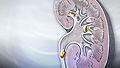
This test may also be done to check whether a high uric acid level in the urine is causing kidney stones.
Kidney stones
A kidney stone is a solid mass made up of tiny crystals. One or more stones can be in the kidney or ureter at the same time.
Normal Results
Normal values range from 250 to 750 mg/24 hours (1487 to 4461 mmol/24 hours).
Normal value ranges may vary slightly among different labs. Some labs use different measurements or test different samples. Talk to your provider about the meaning of your specific test results.
What Abnormal Results Mean
A high uric acid level in the urine may be due to:
- Body not being able to process purine (Lesch-Nyhan syndrome)
Lesch-Nyhan syndrome
Lesch-Nyhan syndrome is a disorder that is passed down through families (inherited). It affects how the body builds and breaks down chemicals called...
Read Article Now Book Mark Article - Blood cancers
- Certain other cancers that have spread (metastasized)
- Disease that results in breakdown of muscle fibers (rhabdomyolysis)
Rhabdomyolysis
Rhabdomyolysis is the breakdown of muscle tissue that leads to the release of muscle fiber contents into the blood. These substances are harmful to ...
 ImageRead Article Now Book Mark Article
 - Disorders that affect the bone marrow (myeloproliferative disorder)
- Disorder of the kidney tubes in which certain substances normally absorbed into the bloodstream by the kidneys are released into the urine instead (Fanconi syndrome)
Fanconi syndrome
Fanconi syndrome is a disorder of the kidney tubes in which certain substances normally absorbed into the bloodstream by the kidneys are released int...
ImageRead Article Now Book Mark Article - Gout
- High-purine diet
A low uric acid level in the urine may be due to:
- Chronic kidney disease that impairs the kidneys' ability to get rid of uric acid, which can lead to gout or kidney damage
Chronic kidney disease
Chronic kidney disease (CKD) usually causes the slow loss of kidney function over time. The main job of the kidneys is to remove wastes and excess w...
ImageRead Article Now Book Mark Article - Kidneys that are not able to filter fluids and waste normally (chronic glomerulonephritis)
Glomerulonephritis
Glomerulonephritis is a type of kidney disease in which the part of your kidneys that helps filter waste and fluids from the blood is damaged....
ImageRead Article Now Book Mark Article - Lead poisoning
Lead poisoning
Lead is a very strong poison. When a person swallows an object that has lead in it or breathes in lead dust, some of the poison can stay in the body...
Read Article Now Book Mark Article - Long-term (chronic) alcohol use
Risks
There are no risks with this test.
References
Dalbeth N. Clinical features and treatment of gout. In: Firestein GS, McInnes IB, Koretzky GA, Mikuls TR, Neogi T, O'Dell JR, eds. Firestein and Kelley's Textbook of Rheumatology. 12th ed. Philadelphia, PA: Elsevier; 2025:chap 97.
Riley RS, McPherson RA. Basic examination of urine. In: McPherson RA, Pincus MR, eds. Henry's Clinical Diagnosis and Management by Laboratory Methods. 24th ed. Philadelphia, PA: Elsevier; 2022:chap 29.
Sakhaee K, Moe OW. Urolithiasis. In: Yu ASL, Chertow GM, Luyckx VA, Marsden PA, Skorecki K, Taal MW, eds. Brenner and Rector's The Kidney. 11th ed. Philadelphia, PA: Elsevier; 2020:chap 38.
Uric acid test - illustration
Uric acid urine test is performed to check for the amount of uric acid in urine. Urine is collected over a 24 hour period and is sent to the laboratory for testing. The most common reason for measuring uric acid levels is in the diagnosis or treatment of gout, because gout results from crystallization of uric acid crystals in joints. Some kidney stones are also composed of uric acid.
Uric acid test
illustration
Uric acid crystals - illustration
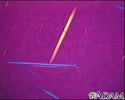
These spiked rods are uric acid crystals photographed under polarized light. Increased uric acid blood levels and formation of uric acid crystals in the joints are associated with gout.
Uric acid crystals
illustration

Uric acid test - illustration
Uric acid urine test is performed to check for the amount of uric acid in urine. Urine is collected over a 24 hour period and is sent to the laboratory for testing. The most common reason for measuring uric acid levels is in the diagnosis or treatment of gout, because gout results from crystallization of uric acid crystals in joints. Some kidney stones are also composed of uric acid.
Uric acid test
illustration
Uric acid crystals - illustration
These spiked rods are uric acid crystals photographed under polarized light. Increased uric acid blood levels and formation of uric acid crystals in the joints are associated with gout.
Uric acid crystals
illustration
Review Date: 7/1/2025
Reviewed By: Frank D. Brodkey, MD, FCCM, Associate Professor, Section of Pulmonary and Critical Care Medicine, University of Wisconsin School of Medicine and Public Health, Madison, WI. Also reviewed by David C. Dugdale, MD, Medical Director, Brenda Conaway, Editorial Director, and the A.D.A.M. Editorial team.
 All rights reserved.